Dark Social and Private Community Reputation Damage Detection
Brands can catch reputation damage in private spaces through indirect signals.
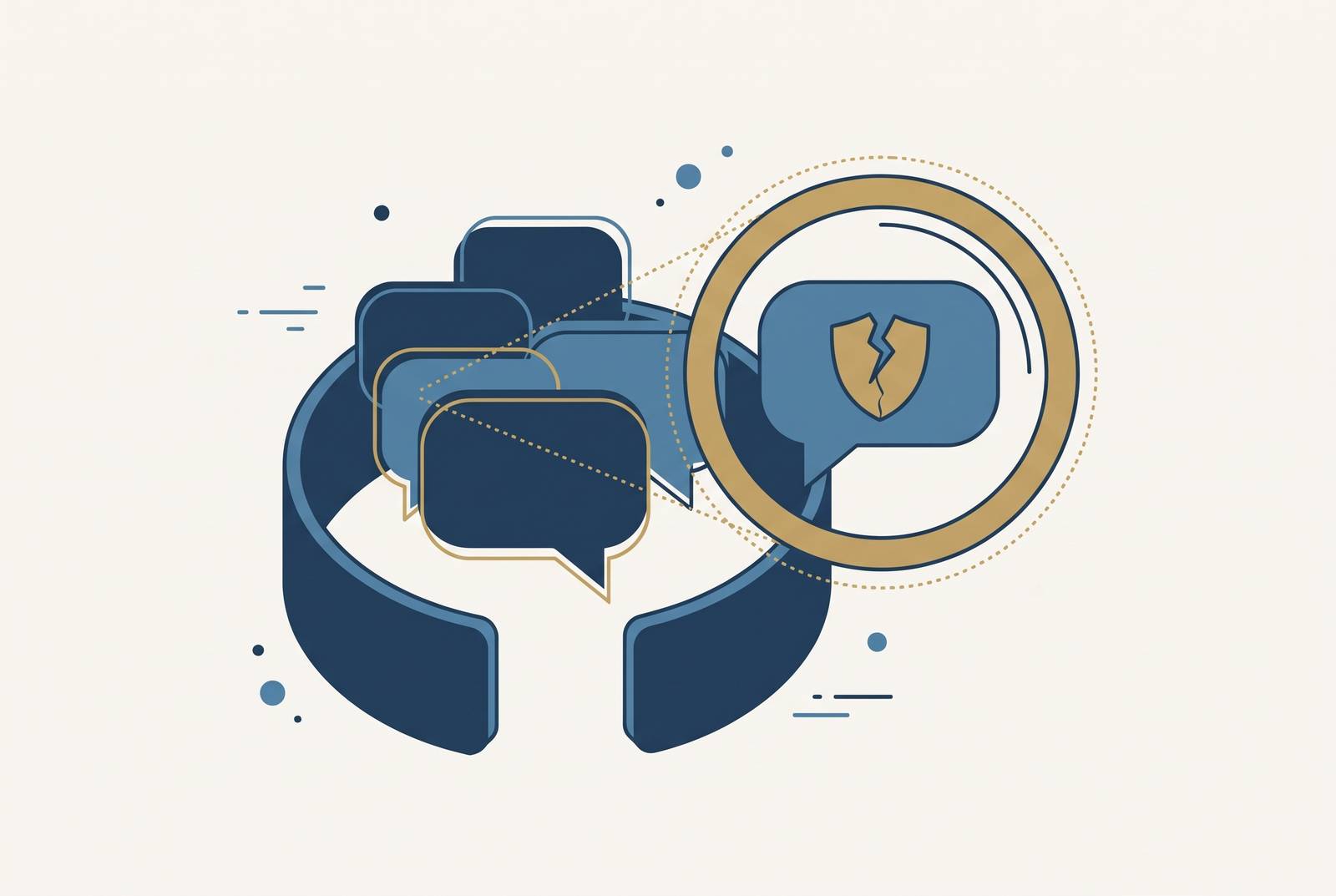
Private conversations and AI-generated answers can shape a brand’s reputation long before public monitoring detects a problem. A brand can spot that damage without reading every hidden conversation. It requires a realistic system built around indirect signals, trusted community presence, and regular checks of AI answers, supported by published content that gives people and systems accurate facts to use.
Why the conversations shaping your brand reputation are no longer visible to your monitoring tools
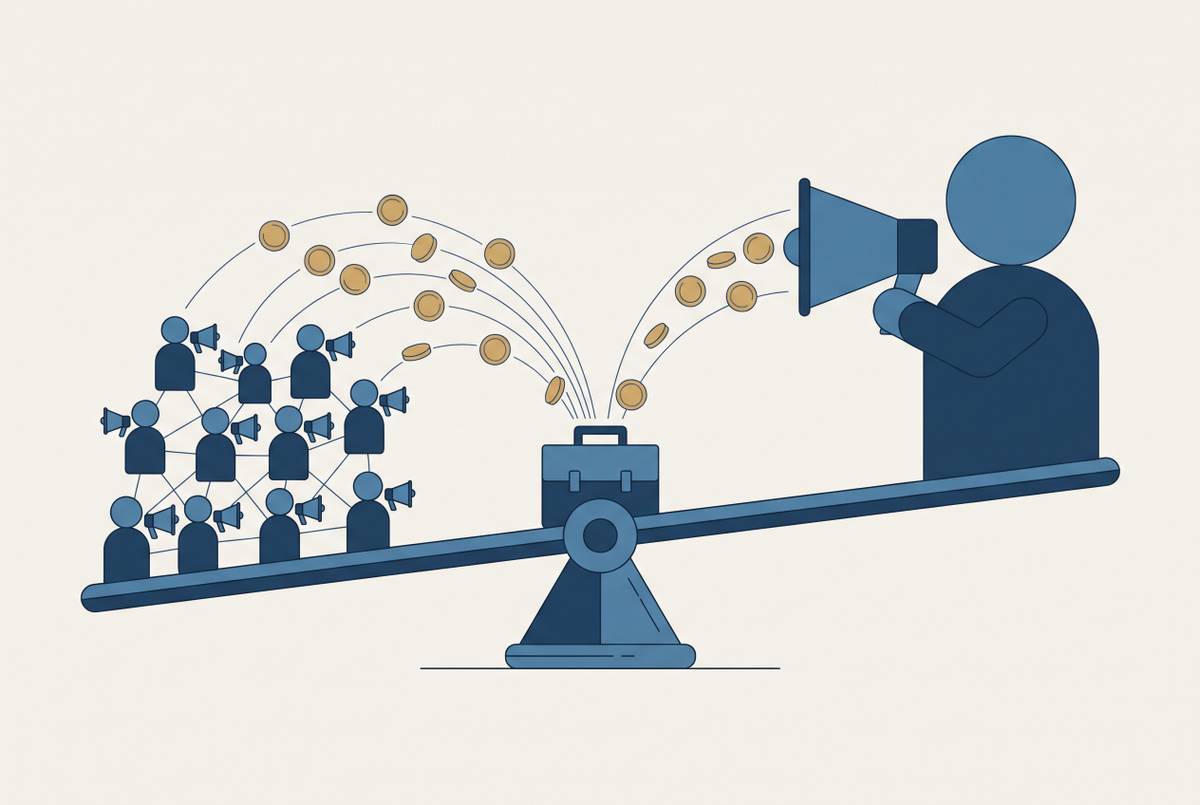
A reputation dashboard can look healthy while customers talk in private about leaving. Support teams may hear complaints that public listening never captured, while campaigns appear to succeed against a sentiment reading that excludes the most engaged users. This is an operational blind spot. The tools are reporting on what they can reach, but the decisions informed by those reports often assume a much wider view.
Pulsar identifies Discord servers, Telegram groups, WhatsApp chats, closed Slack communities, and private forums as destinations for these conversations. What they say in private is out of reach of the public APIs and indexed feeds that conventional listening relies on. Public listening works by collecting what is publicly addressable. A better version of that same system cannot make a closed conversation public, so upgrading the monitoring stack does not remove the underlying limitation.
Why are audiences moving out of view? Algorithm-driven feeds reward performance over candor, while AI-generated content makes it harder to know whether a public comment came from a person. Private groups give people social context to help them work out whom to trust. The audience has not stopped talking about brands. Instead, people increasingly ask questions before they buy, share complaints after they buy, and recommend what to buy again in places where conventional monitoring cannot follow them.
What dark social actually contains, and why it predicts outcomes better than public signals do
Pulsar identifies five kinds of intelligence concentrated in dark social, including pre-formation trend signals, authentic product talk, complaint and support patterns, community sentiment, and crisis incubation. These exchanges can be more candid than their public equivalents because people are speaking to a smaller, known audience. Dishonesty has a more immediate social cost there. A product recommendation goes to people who may return with questions about whether it was sound.
That candor gives private discussion predictive value. A skincare community may discuss an ingredient before it becomes a visible public trend, just as a gaming Discord may develop vocabulary before it spreads into public feeds. Complaints can develop in the same sequence. By the time an issue becomes publicly visible, members of private groups may already have compared experiences and settled on an explanation. The first public mention is not necessarily the beginning of the problem.
The resulting delay can distort more than crisis detection. A campaign may improve public reactions without changing what committed customers tell one another, so the brand may think it had more effect than it did. A brand could look strongly positive in public listening while being viewed far less favorably in the three Discord servers containing its most active users. That divergence is the central risk, because community sentiment is the signal closer to retention.
Why direct monitoring of private channels is not the answer, and what the realistic perimeter looks like
The first response to that risk should be to define the limits of detection. Pulsar distinguishes between what is reachable, what can be inferred, and what remains genuinely blind. This creates a chosen perimeter. Some semi-public Discord servers, Telegram channels a brand joins legitimately, and communities the brand hosts fall within reach. Encrypted one-to-one messages and closed invitation-only groups may remain beyond it.
Between those two sits the inferable tier. Patterns in referrals, groups of support tickets, and survey responses after a campaign can show signs of activity without showing the conversation itself. A rise in “how did you hear about us?” responses naming a particular community can indicate where attention is forming, even when the brand cannot see what members said.
That distinction also separates detection from access. Brand presence in a private community must be earned through value, and observing an indirect signal does not confer permission to enter. The practical goal is narrower than surveillance. It is to spot signs of a growing issue soon enough to look into it or clear it up, while accepting that some exchanges stay out of view. Any architecture that claims more risks giving decision-makers another misleading sense of completeness.
Indirect signals that surface dark social reputation damage before it reaches public feeds
Unexplained traffic can be the first visible trace of private sharing. A spike in direct traffic or unattributed referrals, with no active campaign to explain it, may indicate that something is circulating outside public view. Timing makes the clue more useful. When the surge precedes public mentions, it suggests attention was already building elsewhere. It does not, by itself, reveal whether the underlying conversation was praise, criticism, or a question.
Support channels can help establish that direction. When many similar complaints or questions arrive at once with no matching public discussion, it often suggests that customers have been comparing their experiences in private. Read together with unexplained traffic, they can turn an ambiguous rise in attention into a more specific concern.
Search behavior adds another piece of evidence. Unusual query clusters reaching a brand’s site, particularly navigational searches from new users who appear to have formed opinions already, can suggest that perceptions developed before the first trackable visit. Public sentiment may still look unchanged. Comparing that reading with deteriorating community signals helps reveal the gap.
Retention signals can make the commercial risk clearer. More questions about cancellation, more support escalations, or longer waits between repeat purchases before public complaints appear can fit with negative private discussion. They are not proof of its cause. The lesson is to read these indicators together as a detection system, rather than treat any one as a measurement of dark social. Their value lies in revealing a pattern early enough to act.
Community presence as an early-warning system, not a marketing channel
Indirect signals can suggest that a conversation exists, but legitimate community presence can reveal what people actually mean. A complaint category in support data cannot always explain the reasoning that made an issue persuasive inside a group. Trusted participants can provide that context. For it to help, those relationships need to be in place before a problem needs attention.
Pulsar notes that creators are taking engaged audiences into private spaces and that roughly a third of creators now run private communities beside their public channels. Working with leaders who already hold trust can help a brand understand concerns that public monitoring misses. Micro-influencers and community operators need substance they can explain in their own terms. A message that collapses under that reinterpretation is not strong enough for the setting.
A brand-owned semi-private community offers a different route. A Discord space, closed Slack, or private newsletter community is not equivalent to independent dark social, but members can bring concerns across from other groups. That makes it an adjacent source of warning. During a crisis, trusted third parties already inside relevant communities can also clarify facts where a public statement may not reach.
How AI answer engines have added a second invisible layer to the same reputation problem
Someone who is thinking of buying can ask ChatGPT about a brand or see a Google AI Overview before the brand knows which claims shaped that person’s view. Standard public listening cannot show all of that exchange. As with dark social, perception can form before the first interaction the brand can track. The hidden influence is an answer rather than a group conversation, but the detection problem is similar.
Absence can be consequential too. If a brand is missing from an answer about its core category, it is excluded at the moment someone is forming a shortlist. That can produce a commercial outcome similar to a negative statement about the brand. Visibility also differs between answer engines. A brand represented on one surface may be absent on another, so a favorable result in one place cannot stand in for the rest.
The two blind spots can also compound. Private narratives can later surface in public material that enters an AI engine’s retrieval context or training data. At that point, a concern first developed inside a closed group can reappear as part of an AI-generated account of the brand. Monitoring only its eventual public mentions would miss how it is being selected and framed in answers.
Monitoring AI answer surfaces as a component of reputation detection
For a brand building this third detection layer, the task is regular examination of relevant answers across ChatGPT, Claude, Gemini, and Perplexity. Does the brand appear for queries central to its category? When it appears, is the account accurate and favorable, and which sources support it? Each engine needs its own checks because their citation patterns differ. One result cannot establish consistent coverage across all four.
Share of model makes presence measurable. It is the fraction of relevant AI-generated answers that include a brand, and a low share on core queries can serve as an early-warning signal. Presence alone is not enough, however. An included brand may still be described through outdated claims or unfavorable framing, while an absent brand leaves the reputation-forming moment to whatever appears instead.
Citation analysis helps explain those results. An answer drawing on the brand’s own published content has a different evidential base from one built around third-party reviews, media coverage, or community platforms. The distributed trust model places much of that base outside the brand’s site. Monitoring needs to check whether mentions across those sources are accurate and favorable, as well as whether the homepage gets a citation. This reveals where AI-visible reputation rests and where it is fragile.
What the brand's own published content needs to do to hold its position in both dark social and AI answers
That dependence on outside sources creates a limit, but not a reason for passivity. A brand cannot fully control how people interpret it in private or which sources an AI engine chooses. It does control its own published content. The role of that content is to provide specific, accurate, verifiable claims that people can discuss and AI engines can extract and attribute. Vague brand narrative offers less useful material for either task.
Accuracy on the brand’s site is necessary but insufficient. AI engines also draw on what the broader web says, so an accurate account supported by third-party sources, review platforms, and media mentions is more defensible than one found only on the homepage. This is where published claims meet distributed trust. The brand’s content supplies the facts, while community signals and answer monitoring show whether the wider account matches them. Publication without that feedback leaves the original detection gap unresolved.
Sustaining the foundation also requires control over accuracy. Multi-stage AI content pipelines can support production, with AI drafting and humans reviewing claims before publication. Volume without review creates another exposure. Inaccurate content can be retrieved and cited as readily as accurate content, and an error repeated in an AI answer is harder to correct than one caught before release. In an environment the brand can only partly observe, carefully built and measured published content is its durable asset and the factual basis for responding when detection finds damage.