Competitive Reputation Benchmarking for B2B SaaS Categories
Benchmark whether AI engines put your brand on the buyer shortlist.

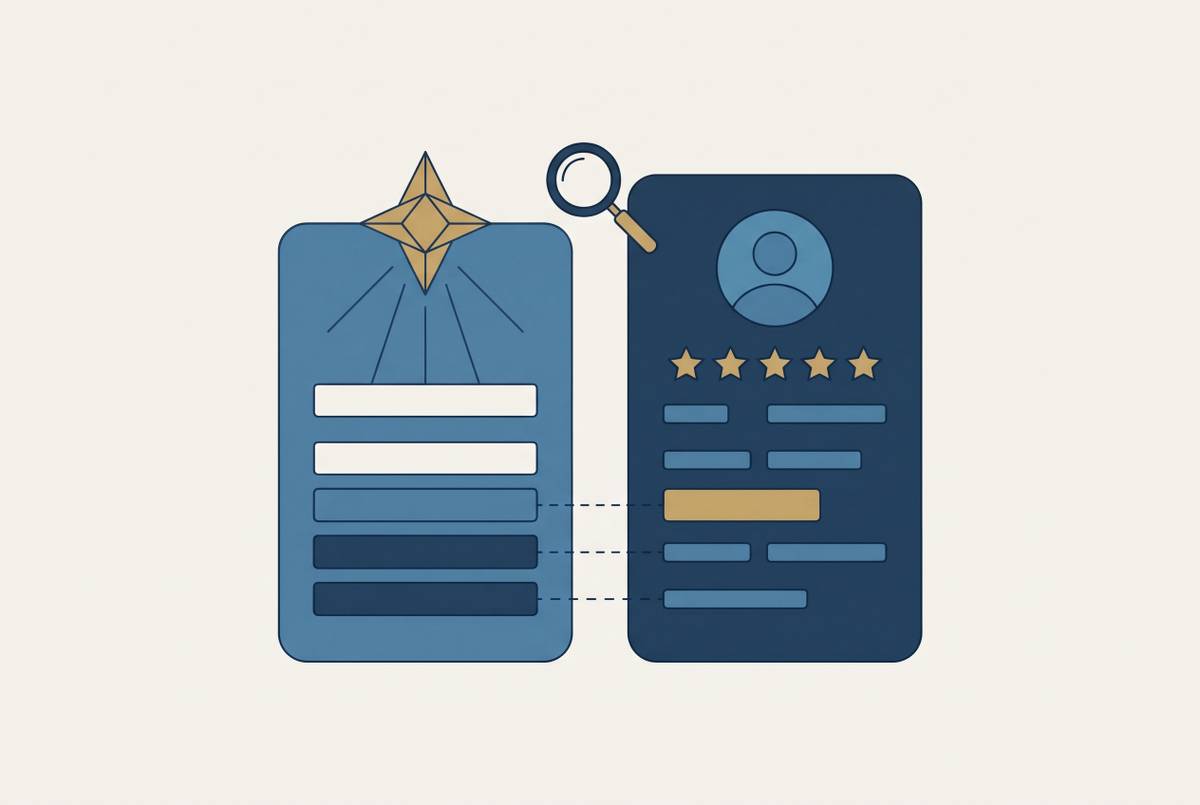
Competitive reputation benchmarking for B2B SaaS now means measuring how often, and how favorably, AI answer engines name a brand against its rivals. Benchmarking now needs to test who enters the buyer’s shortlist as well as who ranks. A useful benchmark tests that question across buyer prompts and engines, then diagnoses the gaps that may signal market share risk before pipeline or revenue does.
Why AI answer engines have become the new shortlist layer in B2B SaaS buying
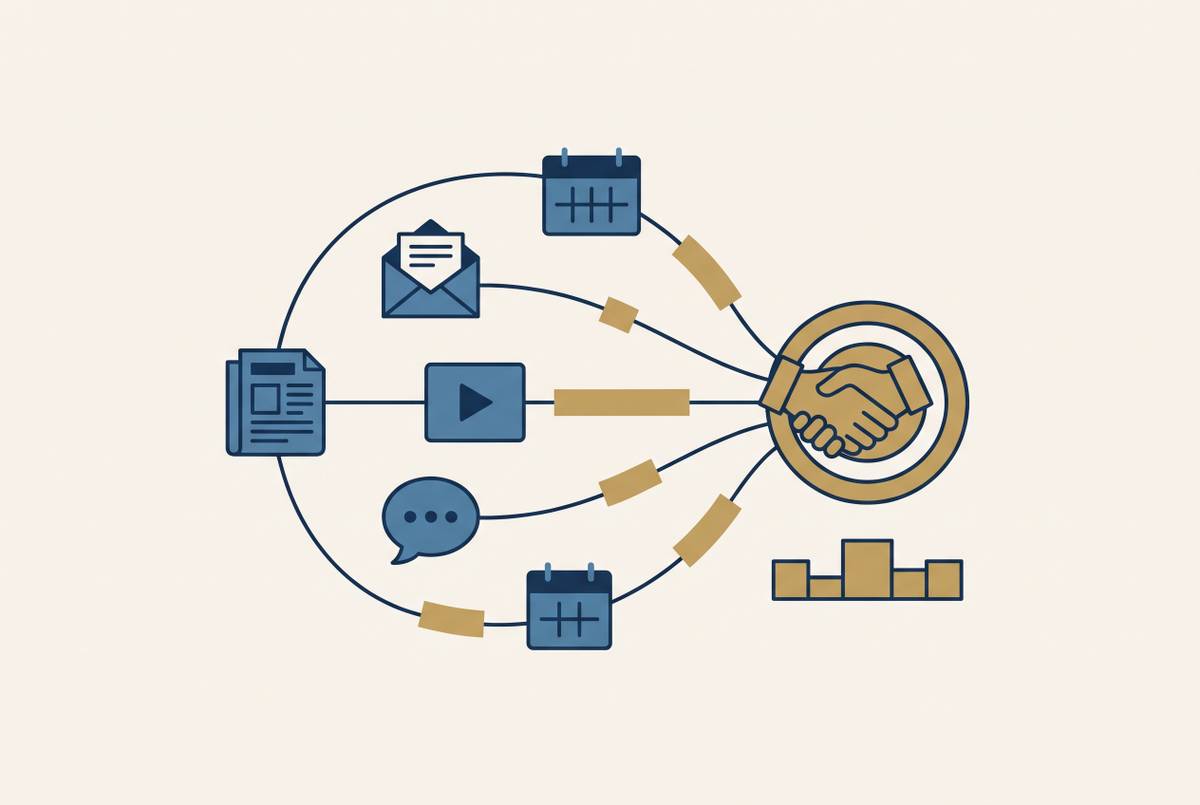
More B2B software buyers now start their research in AI chat interfaces before they speak to sales or visit a website. That moves preference formation upstream of familiar marketing touchpoints. An answer engine synthesizes recommendations from sources including Reddit threads, editorial features, review platforms, and press mentions. Its answer can shape which vendors buyers look into next. Enterprise buyers use these assistants for professional research, so B2B SaaS is part of this shift.
What happens when a well-known brand is missing? It may still appear in search and other channels but be missing when a buyer first starts to favor a vendor. That is an earlier problem than losing a comparison during vendor evaluation. Competitive standing therefore depends on whether AI answers include the brand in the first place, and what they say when they do.
Why a Google ranking is a weak predictor of AI citation, and what that means for competitive standing
Organic rankings and AI citations draw on different parts of the web. A strong Google position and near-zero AI citations can coexist without contradiction, because success in one does not establish success in the other. Strong SEO is neither necessary nor sufficient for citation. This is why a search ranking is a weak proxy for competitive standing inside AI answers.
A competitor that ranks below a brand on Google may show up in AI answers to buyers’ questions while that brand goes unnamed. Traditional rank-tracking would not reveal that reversal, even if it accurately reported every search position it was designed to track. The objection that strong SEO probably means adequate AI visibility therefore asks one measurement to answer a different question. A separate benchmark is needed to see whether the competitive order changes when buyers ask an engine for a recommendation.
What the distribution of AI visibility scores actually looks like across B2B SaaS
In Foglift’s Q1 2026 benchmark of thousands of brands, the median AI Visibility benchmark score is 62 for SaaS and B2B software and 48 for e-commerce and DTC. SaaS was the highest-scoring industry in that benchmark. Yet the internal spread is wide, with a small group of brands capturing most citations. Buyers may see very different sets of rivals depending on which brands engines name again and again.
Narrower categories can show a more compressed gap. The same benchmark places AppFolio at 71 and Buildium at 67 in property management, a four-point separation. This example serves to calibrate the comparison. It suggests that competitive density in a narrower or more mature category can affect how sharply AI platforms distinguish vendors. It also cautions against treating a broad SaaS median as the only useful reference point.
What, then, counts as a good score? These figures provide context, but they do not establish universal bands for good, average, and poor performance. A score’s meaning depends on the category and the instrument that produced it. That instrument also needs to capture all the engines where the competitive gap could appear.
Why scores vary by engine and why single-platform measurement misreads competitive position
Each engine uses the sources it can draw from in a different way. Perplexity’s real-time retrieval favors Reddit, niche directories, and recent data-rich content, so a brand absent from those sources can underperform there despite strong content elsewhere. A favorable result on ChatGPT would not reveal that absence. The brand’s position is a profile across platforms.
Foglift’s Q3 2026 update expands its benchmark to five engines by adding Gemini. The update makes engine coverage part of the comparison boundary, since a four-engine baseline cannot be compared directly with a five-engine result. Changing the panel changes what the benchmark measures. For a team designing its own study, the lesson is to retain engine-level results and hold coverage constant through the benchmark period. Otherwise, a score may rise or fall because the test changed, even if the brand’s standing against its rivals stayed the same.
What signals actually drive citation — and where the citation surface is built
Most AI citations come from off-domain sources that the brand does not directly control. A citation gap thus often suggests that the brand has little third-party coverage, even if its on-site content is strong. The relevant surface includes review platforms, directories, community discussions, and editorial coverage. A low score should prompt a team to investigate coverage in those sources even when the brand’s website is polished.
Technical access is a separate floor condition. Crawlability problems, including robots.txt restrictions affecting GPTBot, OAI-SearchBot, or Google-Extended, can prevent engines from accessing relevant content regardless of its quality. Near-zero visibility should therefore trigger a technical check before a judgment about reputation. Missing access and missing third-party coverage are different problems, even if both can look like silence in a report.
If a rival appears much more often but receives comparable descriptions when both brands are named, the gap is more consistent with presence or access than with a difference in perceived brand quality. If a brand appears frequently but is described negatively or inaccurately, frequency alone hides the weakness.
How to design a competitive AI reputation benchmark — prompt set, engine coverage, and scoring dimensions
For a team ready to run the benchmark, the first task is to freeze a panel of buyer prompts. Include category-discovery questions such as “what is the best [category] software?”, comparison questions such as “compare [Company A] vs [Company B]”, and use-case questions tied to specific jobs the product does. Each type tests a different competitive condition. Discovery reveals share of voice across the category, comparison reveals how named alternatives are treated, and use-case questions test whether engines understand the brand’s specific positioning.
Run the same prompts in the same time window, rather than adjusting the questions for each vendor and treating the resulting scores as comparable. Foglift’s Q3 2026 benchmark used 75 brand-neutral buyer questions across multiple verticals. That provides an example of a larger frozen panel suited to industry-level baseline comparisons, with internal studies free to use a different size.
Next, fix the engine list for the benchmark period. Coverage across ChatGPT, Claude, Gemini, and Perplexity exposes differences that a single-platform check would miss. Add Google AI Overviews for categories where buyers begin in Google Search, but keep its results distinct because its citation mechanism differs from conversational engines. Broader coverage does not make results interchangeable. Preserve the per-engine view so that an aggregate cannot conceal a platform-specific absence.
First-party reports can add to the findings from these direct prompt tests. Microsoft Copilot surfaces citation data through Bing Webmaster Tools’ AI Performance report. Google Search Console’s Generative AI features report launched in June 2026 and is another free source of reports. These reports add evidence, but the competitive comparison still depends on consistent prompts, engines, timing, and scoring. A report from a different surface cannot stand in for the shared test.
Score mention rate as the frequency with which each brand is cited across the panel. Record position too, because appearing last in every list is a weaker placement than appearing first. Score favorability apart from frequency so the benchmark can show whether a brand is being overlooked or poorly described. Combining them without retaining their components would make the eventual gap harder to diagnose.
Finally, repeat each prompt and average the results. AI responses are non-deterministic, so the same question can get different answers from one run to the next. A single response is not a stable measurement. Do not interpret a one-point difference as meaningful, and do not present a one-prompt, one-engine check as a defensible competitor score.
How to compare benchmark scores to category baselines and to each other
The first valid comparison is between competitors measured in the same run. They share the prompt panel, engine coverage, time window, and scoring framework, so differences are less likely to come from mismatched instruments. Published industry baselines come second, as directional category context. Tracking the brand’s own change against a fixed baseline comes third, providing the reading that shows whether actions are working over time. Each comparison has a different purpose.
Foglift’s methodology note makes the boundary explicit. A healthcare score from four engines cannot be compared directly with a SaaS score from five engines, nor with a single live checker result. Even two scores that appear to describe the same thing may reflect different questions or coverage. Before interpreting their distance, the reader needs to know whether they share a measuring method.
GeoRankers’ October 2026 synthesis adds four readings that help show how brands compare on visibility. Exposure asks how often AI answers appear for the category’s queries, while concentration asks how much visibility belongs to the top few brands. Capture measures how often an exposed brand is actually cited. Traffic asks whether AI referrals and organic clicks move as expected. The synthesis calls for naming the peers to compare and measuring each engine on its own, while keeping those results apart in any single SaaS-wide score.
What if published baselines disagree about the same brand? The response is not to select the most flattering result. Different instruments can produce different numbers, so establish an internal baseline using a fixed, documented method and measure change against it. Public benchmarks remain useful for orientation. They should not overrule a consistent internal comparison simply because their scores look more favorable.
What to do when the benchmark reveals a gap — the diagnostic read before the response
A near-zero score calls for an access check first. Audit crawlability, including robots.txt restrictions and site rendering issues, before concluding that the brand lacks authority or that its content is poor. Technical absence can resemble a reputation deficit in the results. Until that possibility is addressed, investing in more content risks responding to the wrong cause.
If access is sound, compare frequency with favorability. Low mention rates with comparable sentiment point toward a thin third-party citation surface, so the response is to build presence on relevant review platforms, in editorial coverage, and in communities before investing further in on-domain content. A gap concentrated in Perplexity calls for a narrower investigation of the sources it draws from for category queries. Source coverage may explain the result independently of brand quality. Engine-level results make that distinction visible.
Frequent but negative or inaccurate mentions require a different response. Identify which third-party sources drive the description, then update or supplement those sources rather than simply publishing more on the brand’s own site. The benchmark has located a portrayal problem despite frequent exposure. Treating both as a need for more mentions would miss what the buyer is actually being told.
The final step is to make measurement recurring. A citation gap widening quarter over quarter can become the earliest visible signal of market share risk, before it appears in pipeline or revenue. Track citation rates across the engine panel on a fixed cadence. Because traditional GA4 misses a substantial share of AI-referred traffic, supplement it with direct prospect self-report about how buyers found the brand. That attribution check connects the measured gap to buyer discovery without mistaking an incomplete traffic record for the whole picture.